

If you run a PBN, you know the rule: host your links on IPs from the country you want to rank in, and chase fresh A-class IPs while you are at it. Same country, all unique A-class, done.
The rule is wrong. It builds a link network that looks engineered, which is the opposite of what ranks.
Before we built IP NetworX, we spent months taking apart the backlink profiles of sites that actually hold their positions: authority domains that have sat in the top five for years and walked through Penguin, Panda, and every update since. We wanted to know what a natural profile looks like at the IP level, because that is the profile a real, independent set of websites produces. Two patterns showed up in almost every site we checked. Neither matches the folklore.
Real authority links come from everywhere
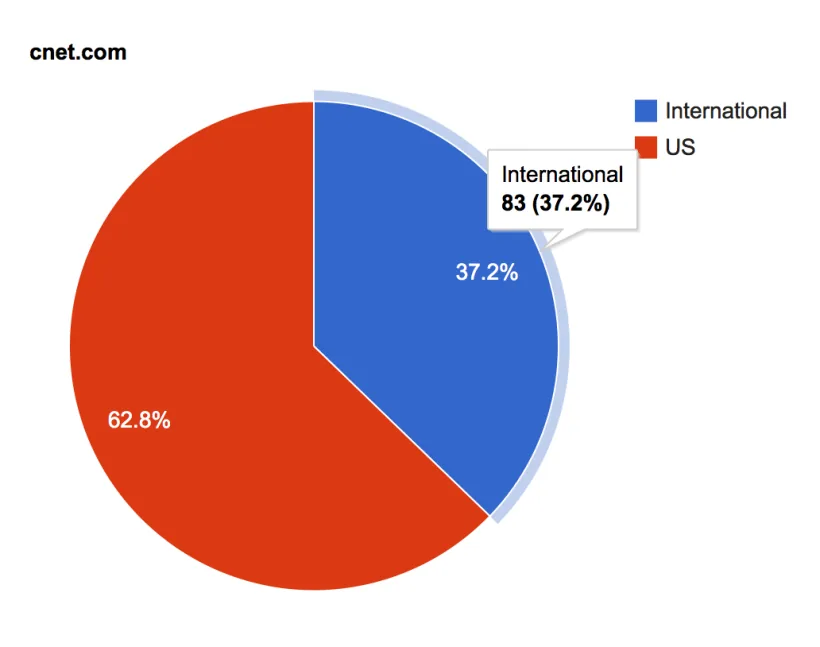
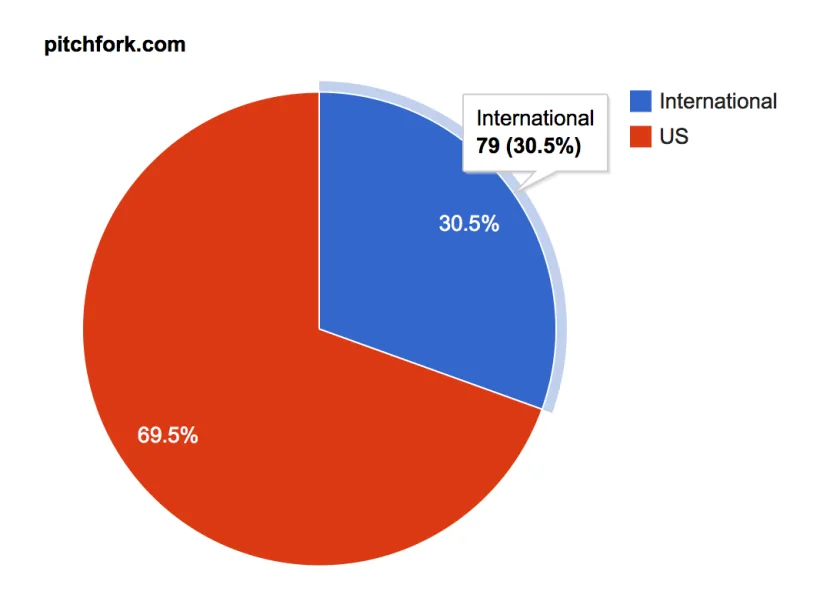
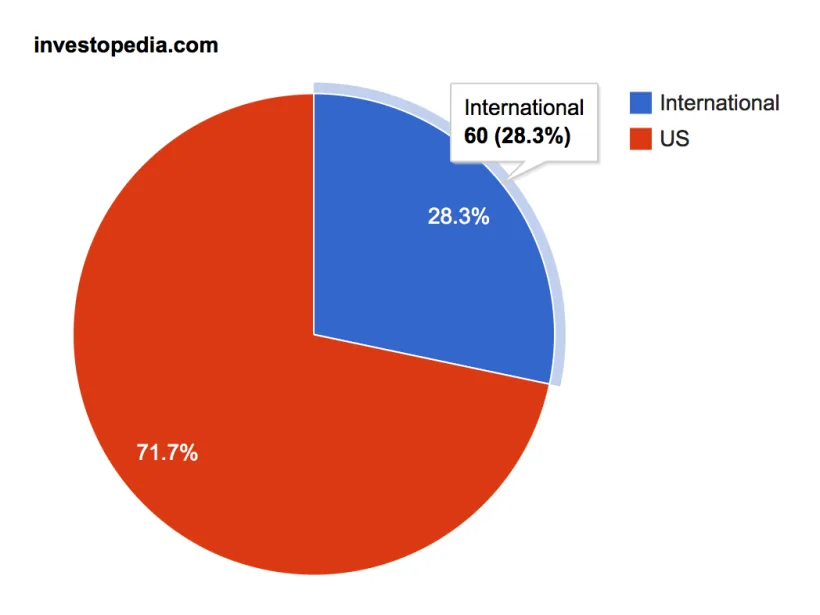
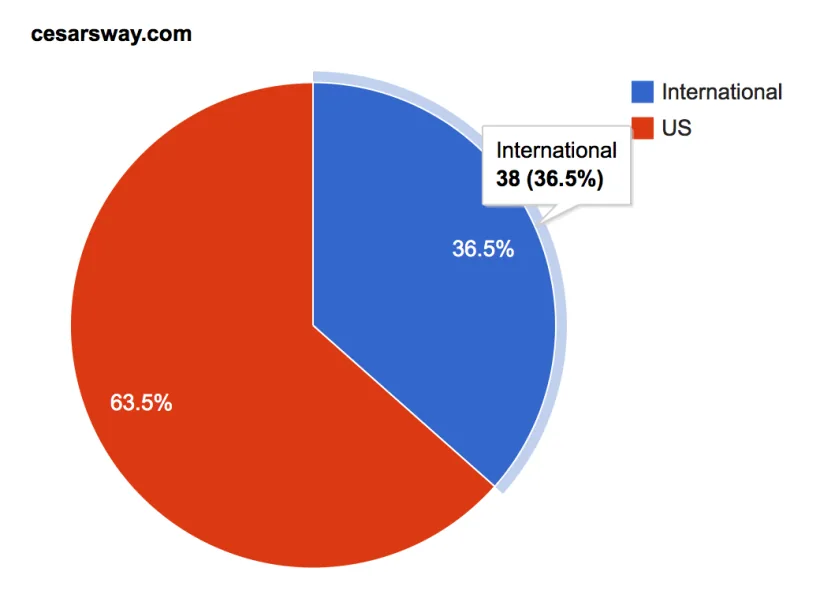
Take four pages from four unrelated niches, each ranking top five for its main keyword. Here is how their referring IPs split by location.
| Page | Niche (top-5 keyword) | Referring IPs | International | Share |
|---|---|---|---|---|
| cnet.com | laptops | 223 | 83 | 37.2% |
| pitchfork.com | music news | 259 | 79 | 30.5% |
| investopedia.com | financial derivatives | 212 | 60 | 28.3% |
| cesarsway.com | dog training | 104 | 38 | 36.5% |
Between 28 and 37 percent of the links point in from outside the United States. That is not a rounding error, it is roughly a third of every profile. And it holds across niches that share nothing with each other: laptops, music, finance, dog training.
Run the same breakdown across a few hundred authority domains and the range barely moves. A site that has been around for years, carries 80 or more referring domains, and survived the big algorithm updates tends to land between 30 and 40 percent international. A few niches sit lower, 15 to 30 percent, but they are the minority.
Now look at your own network. If every link sits on a US IP, the profile you are building resembles none of the sites you are trying to outrank. Real authority pulls links from everywhere. A natural profile mirrors that.
The A-class myth
The second piece of folklore is louder: collect as many unique A-class IPs as you can, as if 100 percent unique A-classes were the finish line. It is not. For a network of any real size, all-unique A-classes is its own footprint.
Two quick definitions. Group the referring IPs by their first octet and you get distinct A-classes, the broadest split. Group by the first two octets and you get distinct B-classes, a finer one. The useful question is not how many IPs a page has, it is how spread out they are across those groups.
| Page | Referring IPs | Distinct A-classes | Distinct B-classes |
|---|---|---|---|
| cnet.com | 223 | 71 (31.8%) | 146 (65.5%) |
| pitchfork.com | 259 | 69 (26.6%) | 158 (61.0%) |
| investopedia.com | 212 | 68 (32.1%) | 155 (73.1%) |
| cesarsway.com | 104 | 48 (46.2%) | 80 (76.9%) |
For the first three pages, distinct A-classes sit between 27 and 32 percent of the total. Not 80, not 100. With a couple of hundred links in a genuine profile, plenty of them naturally share a first octet, so the unique-A-class ratio stays low. Distinct B-classes always run higher than A-classes, because that is simply how addresses fall.
The pattern tracks the number of referring domains. Around 200 to 300 referring domains, distinct A-classes run roughly 25 to 35 percent. Fewer referring domains, higher percentage.
Fewer links mean more unique classes
cesarsway.com already hints at it: 104 referring IPs, 46 percent distinct A-classes, clearly above the other three. Push the link count lower and the effect sharpens.
guinealynx.info ranks top five for “guinea pig care” on just 80 referring IPs:
- Distinct A-classes: 47 of 80, or 58.8%
- Distinct B-classes: 69 of 80, or 86.3%
- International: 24 of 80, or 30.0%
A small profile collides less, so a bigger share of its IPs are unique. That is exactly where the A-class hype comes from. Someone audits a handful of sites with 20 to 30 referring domains, sees 80 percent or more unique A-classes, and decides that is the target. For a site with 30 links, it might be. For a site with 250, copying it is a tell.
One more thing the guinealynx numbers show: a smaller profile is not a more local one. It still runs 30 percent international, right inside the normal band. International share only starts to fall once referring domains drop below 30, and even then it usually holds between 10 and 20 percent.
What a natural profile actually looks like
Put the two patterns together and the target is not “all local, all unique A-class.” It is close to the reverse:
- Roughly a third of links from outside your target country.
- Distinct A-classes around 25 to 35 percent once you pass a couple hundred referring domains, higher only for small profiles.
- A wider spread of B-classes than A-classes, because that is how real IPs land.
Engineered networks miss all three. They cluster: sequential IPs, one or two A-classes, a single country, one pair of nameservers. That cluster is the footprint this whole post is about, and it is exactly what a cheap multi-site host hands you.
This is the logic behind how we place sites. You buy hosting in sites, not IPs. Every site lands on a different server, in a different location, with its own nameserver, on an IP drawn from a pool of more than 90 A-class networks across many providers. You do not pick an IP or a class, and we do not hand you a block to fill. The system scatters each site across the pool, so a portfolio of 50 or 200 sites reads the way the data above reads: a set of independent, real websites, some sharing an A-class here and there, a healthy share hosted outside the US. Not a neat grid of sequential addresses in one data center.
The misconception was never that IPs do not matter. It was copying half the picture. Real authority is diverse, internationally and across classes. Build for that, and size a plan in sites instead of chasing IP counts.